1 / 1

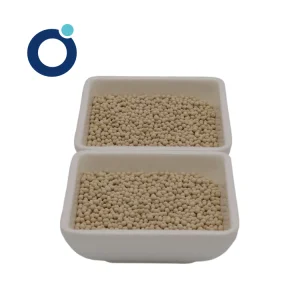
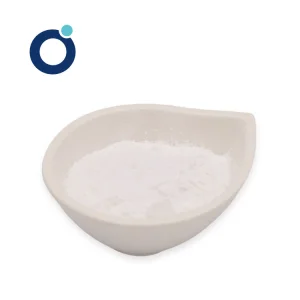
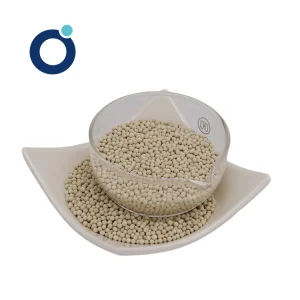
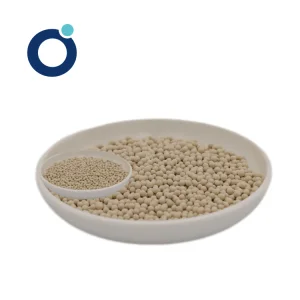
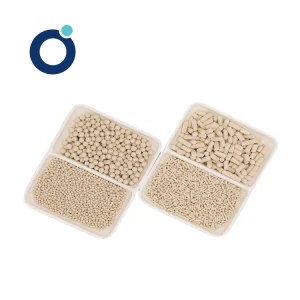
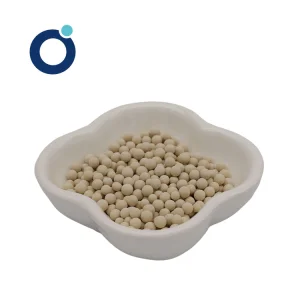
JZ-AZ molecular sieve is formed after deep processing of synthetic molecular sieve powder. It features a specified dispersion and fast adsorption capacity, which effectively improves the stability and strength of materials, avoids bubble formation, and extends product shelf-life.
| Properties | Unit | JZ-AZ3 | JZ-AZ4 | JZ-AZ5 | JZ-AZ9 |
|---|---|---|---|---|---|
| Static Water Adsorption | ≥% | 23 | 24 | 25 | 28 |
| Package Moisture | ≤% | 2.0 | 2.0 | 2.0 | 2.0 |
| PH | ≥ | 9 | 9 | 9 | 9 |
| Bulk Density | ≥g/ml | 0.45 | 0.45 | 0.45 | 0.45 |
| Residue | ≤% | 0.4 | 0.4 | 0.4 | 0.4 |
What are the main functions of the JZ-AZ molecular sieve?
JZ-AZ molecular sieve provides rapid adsorption capacity and excellent dispersion. It improves the strength and stability of materials, prevents bubble formation, and extends shelf-life.
In which industries is the JZ-AZ molecular sieve commonly used?
It is widely used in the insulating glass industry (for sealant strips and solvents), polyurethane glue dehydration, and dehydration processes within the coating and paint industries.
What is the standard packaging format for this product?
The JZ-AZ molecular sieve is supplied in standard 15kg cartons.
What are the storage requirements for JZ-AZ molecular sieve?
As a desiccant, it must not be exposed to the open air. It should be stored in dry conditions within air-proof packaging to maintain its performance.
How does the static water adsorption compare between the JZ-AZ models?
The static water adsorption capacity starts at ≥23% for JZ-AZ3, increasing to ≥24% for JZ-AZ4, ≥25% for JZ-AZ5, and reaches up to ≥28% for the JZ-AZ9 model.
What is the bulk density and pH value of these molecular sieves?
All models in the JZ-AZ series (AZ3, AZ4, AZ5, AZ9) feature a pH value of ≥9 and a bulk density of ≥0.45 g/ml.