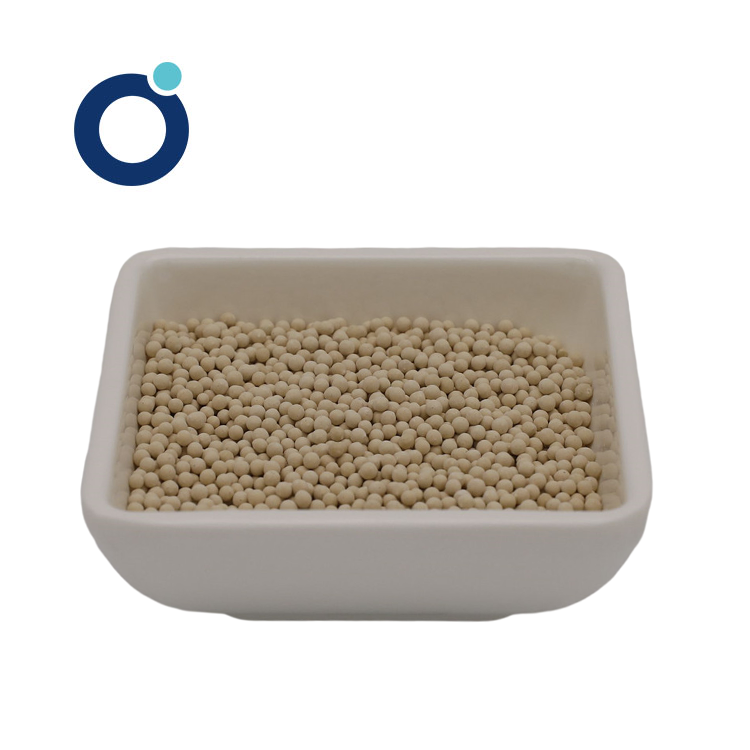
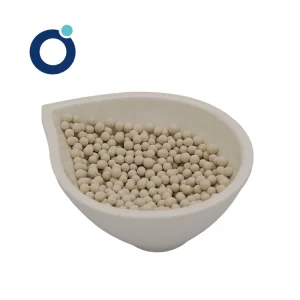
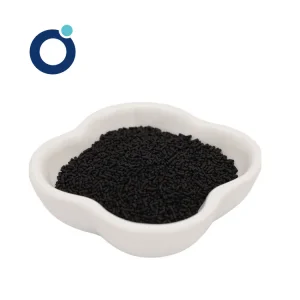
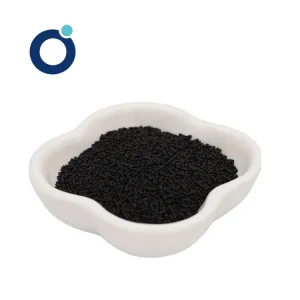
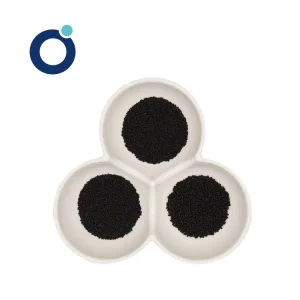
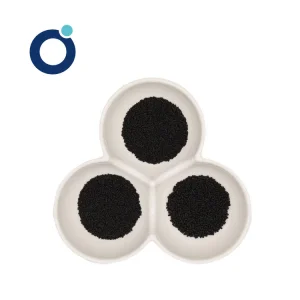
JZ-2ZAS is Sodium aluminosilicate. It could absorb the molecular which diameter is not more than 9 angstroms.
Performance & Industry Application
It meets the special requirements of air separation industry, improves the adsorption capacity of CO2 and water, avoids the phenomenon of freezing tower appears in the process of cryogenic air separation, which is suitable for various large-scale cryogenic and PSA air separation devices.
Main Field & Packaging
Application: Air purification system
Standard Packaging: 140 kg/steel drum
Technical Specifications
Properties
Unit
Sphere Details
Diameter
mm
1.6-2.5
3-5
Static Water Adsorption
≥%
28
28
CO2 Adsorption
≥%
19
19
Bulk Density
≥g/ml
0.63
0.63
Crushing Strength
≥N/Pc
25
60
Attrition Rate
≤%
0.1
0.1
Package Moisture
≤%
1
1
Storage Notice: The product as desiccant cannot be exposed in the open air and should be stored in dry condition with air-proof package.
Frequently Asked Questions (FAQ)
What chemical composition is JZ-2ZAS?
JZ-2ZAS is made of Sodium aluminosilicate.
What is the critical molecular pore size adsorption limit for JZ-2ZAS?
JZ-2ZAS can effectively absorb molecular elements with a diameter of not more than 9 angstroms.
In which industries and devices is this product mainly used?
It meets the requirements of the air separation industry and is ideal for various large-scale cryogenic and PSA air separation devices, as well as air purification systems.
How does JZ-2ZAS help in preventing cryogenic tower freezing?
By improving the adsorption capacity of CO2 and water, JZ-2ZAS prevents the formation of ice or dry ice blocking, thereby avoiding the freezing tower phenomenon during cryogenic air separation.
What are the recommended packaging and storage conditions?
It is packaged in 140 kg steel drums. Because it is a desiccant, it should not be left exposed to open air and must be kept in dry conditions inside air-proof packaging.
What is the static water adsorption and CO2 adsorption capacity?
Both sphere specifications (1.6-2.5 mm and 3-5 mm) offer a static water adsorption of ≥ 28% and a CO2 adsorption of ≥ 19%.